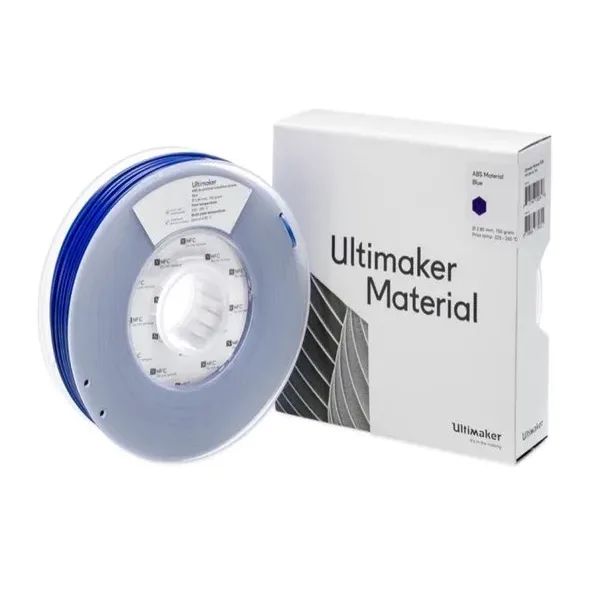
ABS · 2.85 mm · 750 g
Ultimaker ABS Filament Blue — ABS filament, 2.85 mm on 750 g spools in blue, ฿2,033 inc VAT.
ABS is an engineering plastic with high heat and impact resistance that sands and glues easily. Good for spares, jigs, fixtures and parts that meet heat in service.
ABS shrinks as it cools and gives off odour — use an enclosed printer and ventilate the room.
Any FDM printer that takes 2.85 mm filament, which is the standard size on most machines. The right nozzle and bed temperatures depend on your printer — start from the figures Ultimaker prints on the spool and adjust in 5 °C steps until surface finish and layer adhesion are both good.
Order online for nationwide delivery, or collect at True Digital Park, Seacon Bangkae or Central Sriracha. If you would rather not print it yourself, send us the file and our 3D printing service will run it for you.
Any FDM printer that takes 2.85 mm filament.
It depends on your printer and speed. Start from the figures Ultimaker prints on the spool and adjust in 5 °C steps until surface finish and layer adhesion are both good.
ABS shrinks as it cools and gives off odour — use an enclosed printer and ventilate the room.
Yes, at True Digital Park, Seacon Bangkae or Central Sriracha, or we deliver nationwide.
ABS is the engineering plastic behind building bricks and appliance housings. It takes heat to about 95–100 °C, resists impact, sands and finishes well and can be vapour-smoothed with acetone, but it shrinks noticeably and smells while printing.
| Nozzle temperature | 230–260 °C |
|---|---|
| Bed temperature | 90–110 °C |
| Enclosure | Strongly recommended |
| Drying | 70–80 °C for 2–4 h if stored long |
Typical ranges for this material; the spool label and the printer profile are the authority.
Good for parts that must survive heat: automotive clips, equipment covers, gears and load-bearing mechanisms. Avoid large flat parts on an open printer, where corners lift off the bed.
Best on an enclosed printer such as the Bambu Lab P2S, X2D or H2 series to limit warping and fumes
Print with ventilation or a filtered printer, keep the spool dry, and if corners lift, raise the chamber temperature or use the bed adhesive your printer manual recommends.