
PLA · 1.75 mm · 1 kg
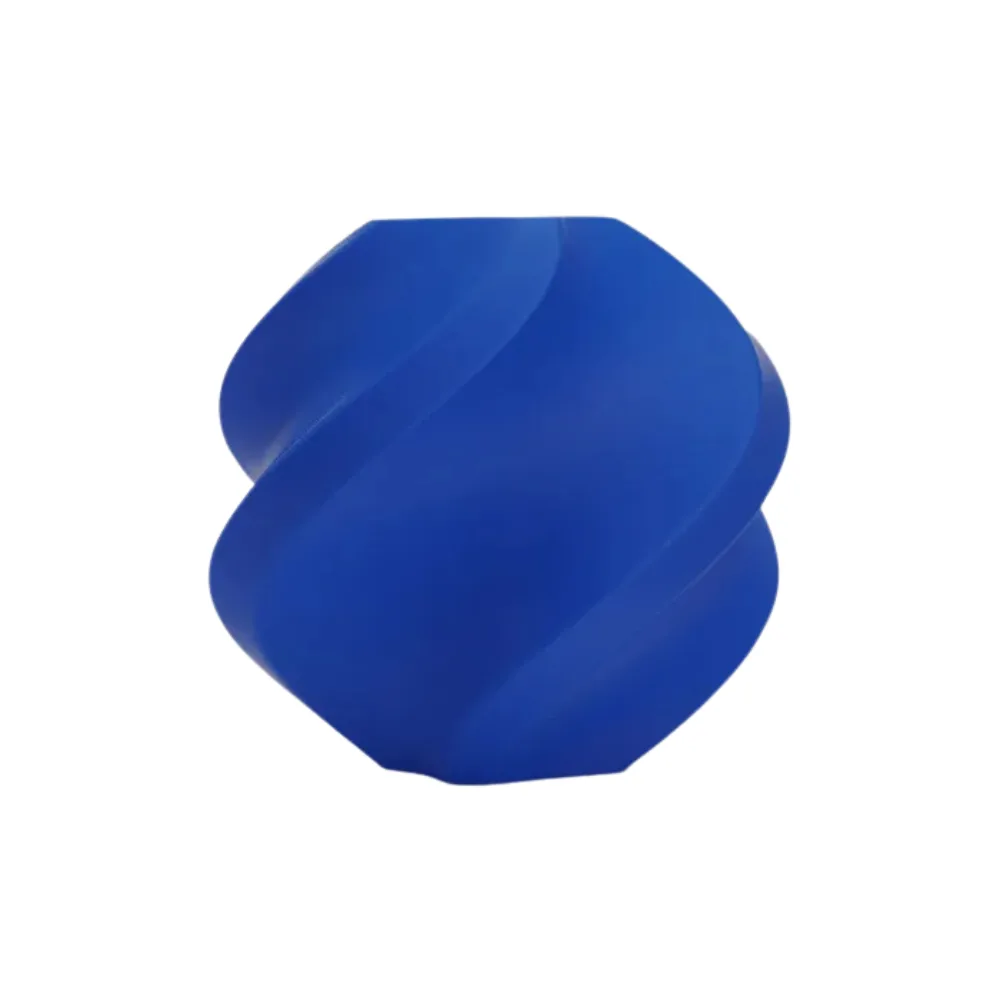
3D Studio 공식 파트너Bambu Lab PLA Lite Filament Blue — PLA filament, 1.75 mm on 1 kg spools in blue, ฿350 inc VAT.
PLA is the easiest of the common filaments to print: little warping, good bed adhesion, no enclosure needed. Good for prototypes, models, décor and teaching.
PLA softens under sustained heat, so it is a poor choice for parts that live in a car or in direct sun.
Any FDM printer that takes 1.75 mm filament, which is the standard size on most machines. The right nozzle and bed temperatures depend on your printer — start from the figures Bambu Lab prints on the spool and adjust in 5 °C steps until surface finish and layer adhesion are both good.
Order online for nationwide delivery, or collect at True Digital Park, Seacon Bangkae or Central Sriracha. If you would rather not print it yourself, send us the file and our 3D printing service will run it for you.
Any FDM printer that takes 1.75 mm filament.
It depends on your printer and speed. Start from the figures Bambu Lab prints on the spool and adjust in 5 °C steps until surface finish and layer adhesion are both good.
PLA softens under sustained heat, so it is a poor choice for parts that live in a car or in direct sun.
Yes, at True Digital Park, Seacon Bangkae or Central Sriracha, or we deliver nationwide.
PLA is the easiest filament to print: low shrinkage, no hot bed or enclosure required, crisp surfaces, vivid colours and almost no smell. It is the starting material for most users and for display pieces.
| Nozzle temperature | 190–220 °C |
|---|---|
| Bed temperature | 50–60 °C |
| Enclosure | Not needed |
| Drying | Rarely; store sealed |
Typical ranges for this material; the spool label and the printer profile are the authority.
Good for models, figures, prototypes, decor and any part that stays cool. Its limits: it softens around 55–60 °C, so it is wrong for parts in a parked car or near heat, and it is more brittle than PETG under impact.
Prints on open-frame machines such as the Bambu Lab A1 mini / A1 and Creality SPARKX i7
Store in a zip bag with desiccant. If the filament snaps easily or pops while printing, dry it at about 45–50 °C for two to four hours.