Force Green Robotics upgraded to Bambu Lab's H2D, X1 Carbon, and A1 series — and transformed how students design, iterate, and compete.
A Nonprofit Team With Big Fabrication Challenges
Force Green Robotics Inc. is a St. Louis-based nonprofit that competes in the FIRST Tech Challenge and runs coding camps, CAD workshops, and mentorship programs for students who lack access to STEM resources. Like many community robotics teams, they hit a wall with their older 3D printing setup — slow speeds, poor material compatibility, and excessive filament waste were slowing down every stage of robot development.
The Limits of Their Previous Setup
Before switching to Bambu Lab, the team had to split large parts into multiple pieces, introducing structural weak points and extra assembly time. Printing engineering-grade materials such as nylon, ABS, or TPU was unreliable due to inconsistent temperatures and poor bed adhesion. Multi-color printing was either unavailable or wasteful, making it impractical for complex designs during a tight competition season.
Building a Bambu Lab Ecosystem
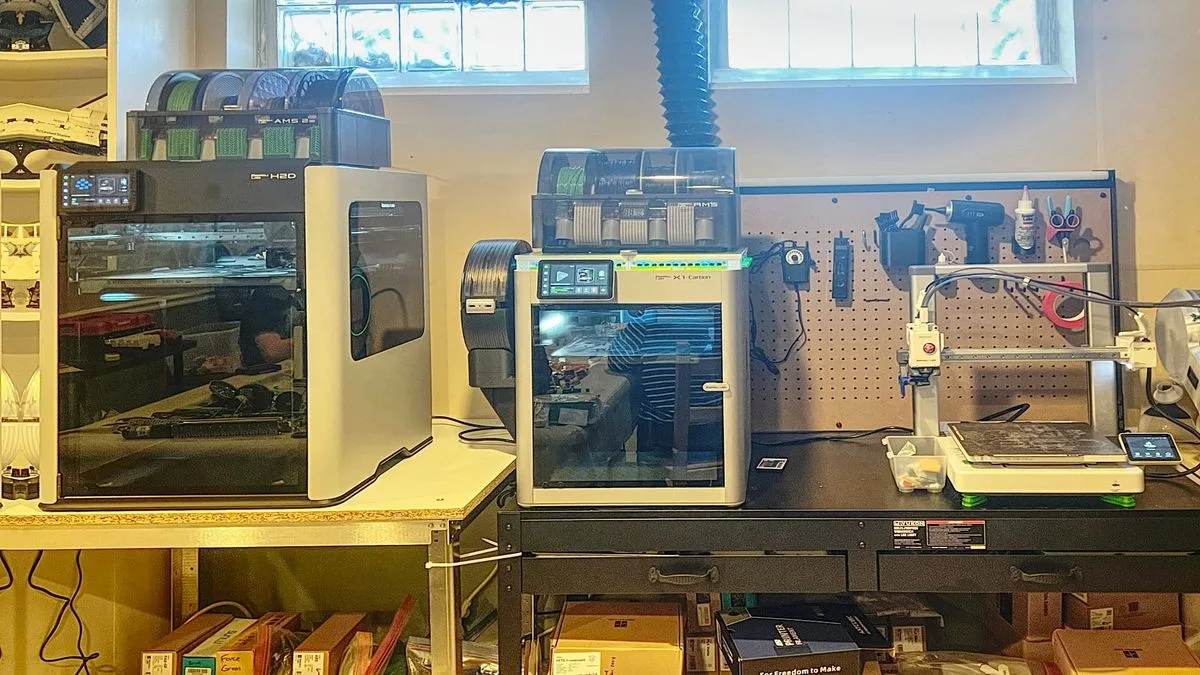
Force Green addressed these pain points by integrating a fleet of Bambu Lab machines: the H2D with AMS 2 Pro, the X1 Carbon with AMS, and entry-level A1 and A1 Mini printers. Enclosed build chambers improved thermal stability and safer fume management in a shared workspace, while the Automatic Material System enabled cleaner multi-material and multi-color workflows with reduced waste.
Faster Iteration, Better Robots
The H2D's larger build volume allowed the team to print bigger components as single pieces, eliminating structural weak points. Higher print speeds compressed design cycles significantly. Bambu Studio was adopted as the team's shared slicing platform, letting multiple students queue and manage jobs simultaneously from different computers.
Impact on STEM Education
The upgrade went beyond competitive performance. Force Green now 3D prints nearly all custom robot components in-house, as well as organisational tools for their workspace. Faster, more reliable fabrication gives students more time to focus on engineering problem-solving, collaboration, and creativity — core skills that extend well beyond the competition floor.