Tandem Ventures used Bambu Lab printers to evolve WHASER from an Iceland field prototype into a globally deployed marine research tool.
A Drone Device Born in Icelandic Waters
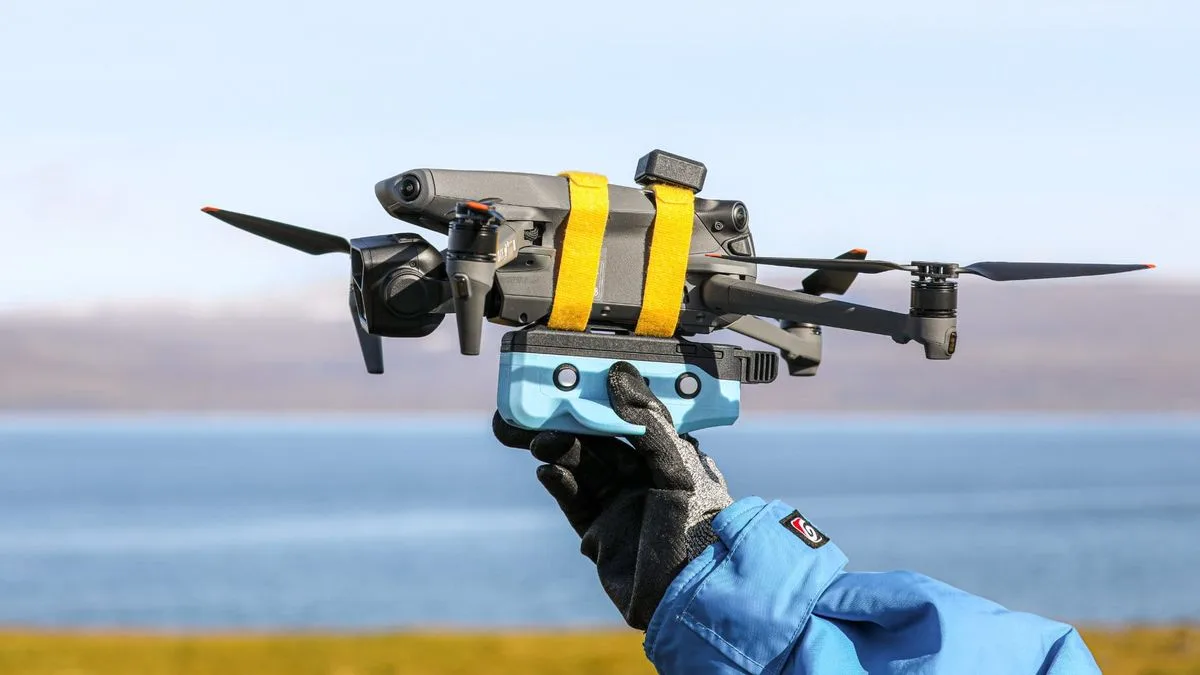
WHASER is a compact, drone-mounted measurement system developed by UK-based R&D agency Tandem Ventures. Weighing just 170 grams, it combines a LiDAR sensor, GPS, IMU, and an Arduino-based microcontroller inside a 3D-printed housing — all designed to let researchers measure marine mammals from the air, quickly and without specialist infrastructure.
From First Flight to 115 Whales
The system was first validated off the coast of Iceland, where it successfully captured biometric data on more than 115 humpback whales. That field success was the proof of concept — but it also triggered something unexpected: inbound requests from researchers across six continents, including teams working with dolphins and sea turtles, not just whales.
The Gap Between Prototype and Product
Turning a working prototype into a reliable field product meant a thorough redesign. Tandem Ventures upgraded the battery for longer endurance, optimised internal geometry to prevent component shift during transit, improved weather sealing around the LiDAR unit, and simplified the interface with an always-on display. A 3D-printed custom hard case was also developed to secure every component and allow teams to begin work immediately on arrival at remote sites.
Why Bambu Lab Printers Made the Difference
Throughout the redesign process, Tandem Ventures relied on Bambu Lab's H2D and P1S printers. The ability to design, print, test, and incorporate changes within days — rather than weeks — meant that feedback from real field deployments could be acted on almost immediately. This rapid iteration loop is what allowed WHASER to mature from a research rig into a tool trusted by marine biologists worldwide.
3D Printing as Field-Ready Infrastructure
WHASER illustrates a broader shift: 3D printing is no longer just for prototyping. When iteration speed matches the pace of real-world feedback, printed components can move directly from development into deployment. For remote marine research, where conditions vary from Hawaii's humidity to Chilean coastal winds, that reliability is not a bonus — it is a requirement.