Learn which 3D printing file format — STL, OBJ, AMF, 3MF, or G-code — is right for your next project and why the choice matters.
Why Your File Format Choice Matters
Every successful 3D print starts long before the printer powers on. The file format you choose acts as the bridge between your design software and the physical output. Selecting the wrong format can mean lost texture data, failed prints, or wasted material — so understanding each option is essential for beginners and experienced makers alike.
The Most Common Formats at a Glance
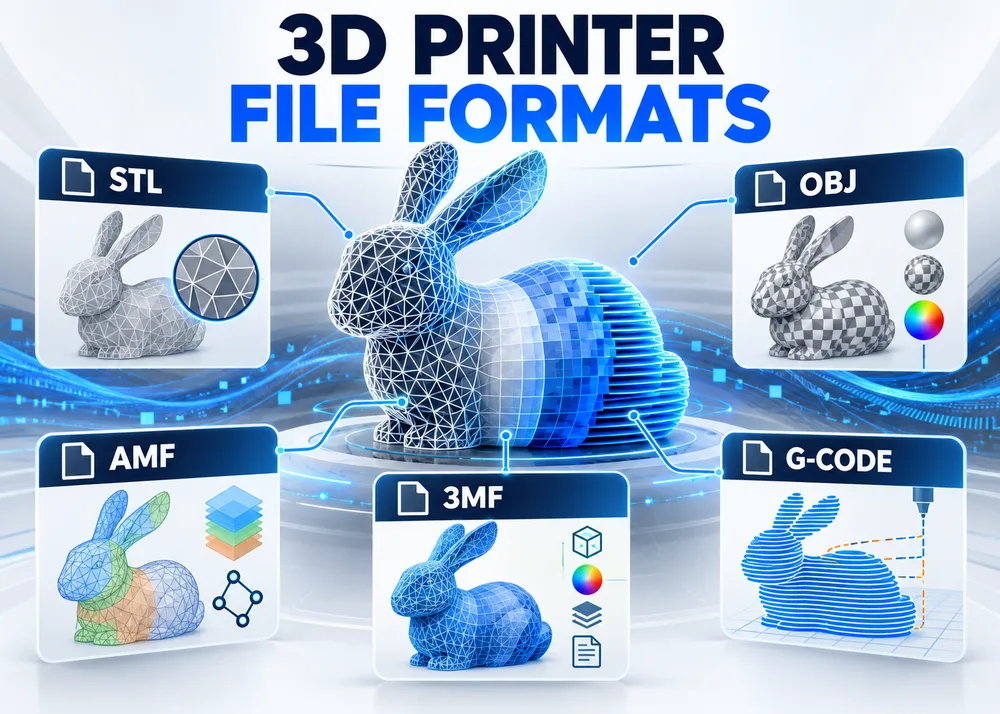
- STL — The long-standing industry standard, compatible with virtually all slicers and printers. It encodes surface geometry as a triangular mesh but carries no color, texture, or material data, making it best suited for simple prototypes.
- OBJ — Extends basic geometry with color and texture support via a companion material file, making it a solid choice for detailed or multi-color models.
- AMF — An ISO/ASTM open standard designed as a direct upgrade to STL, adding native color, material, and curved-geometry support. Technically capable, though less widely adopted than 3MF in current workflows.
- 3MF — The modern go-to format. A single compressed package that stores geometry, color, materials, print settings, and metadata together, with built-in error checking for cleaner prints.
- G-code — Not a design format but the final machine-instruction file your slicer generates. This is what the printer actually reads and executes.
Choosing the Right Format for Your Project
For quick, single-material prototypes, STL remains a reliable and universally supported option. When color or texture is part of the design, OBJ or 3MF are better choices. For complex multi-material or multi-object print projects, 3MF offers the most complete feature set in a compact, self-validating file. AMF is worth knowing about for standards-compliant workflows, though 3MF has largely taken the lead in real-world slicer support.
Looking Ahead
As 3D printers grow more capable — handling multiple materials, finer nozzles, and richer color palettes — file formats are evolving alongside them. The shift toward 3MF in major slicing platforms signals a broader move away from the limitations of legacy formats, giving makers more control and fewer surprises at print time.