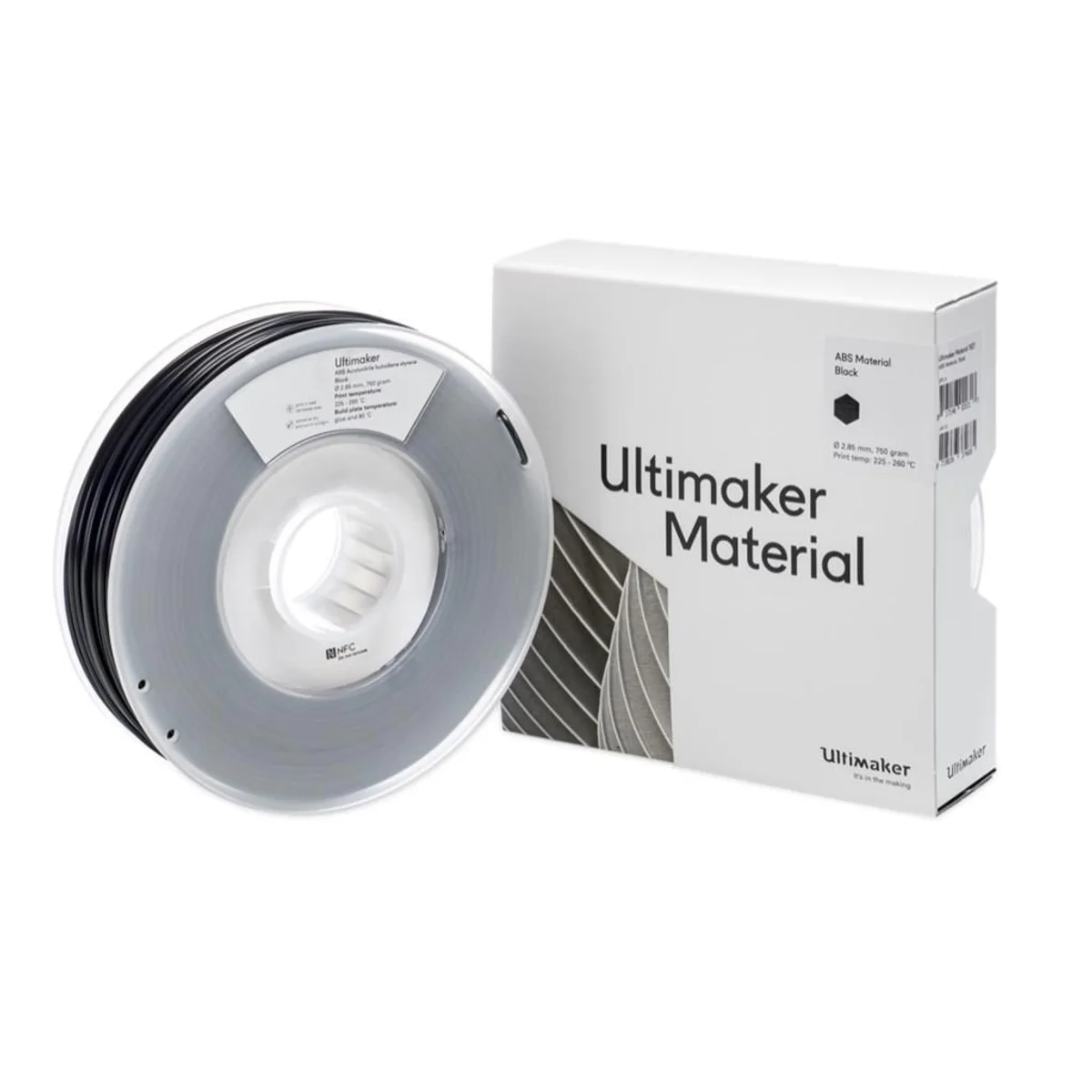
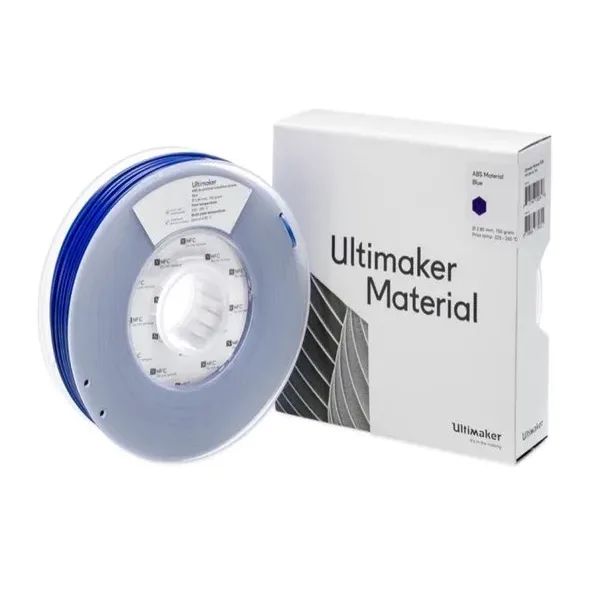
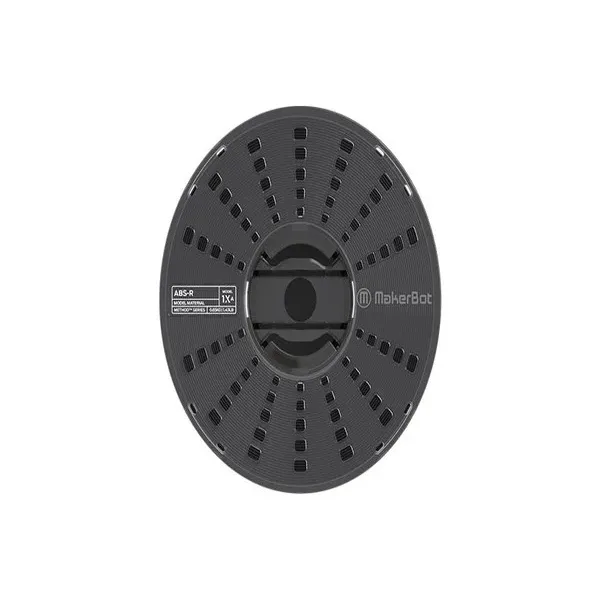
ABS filament
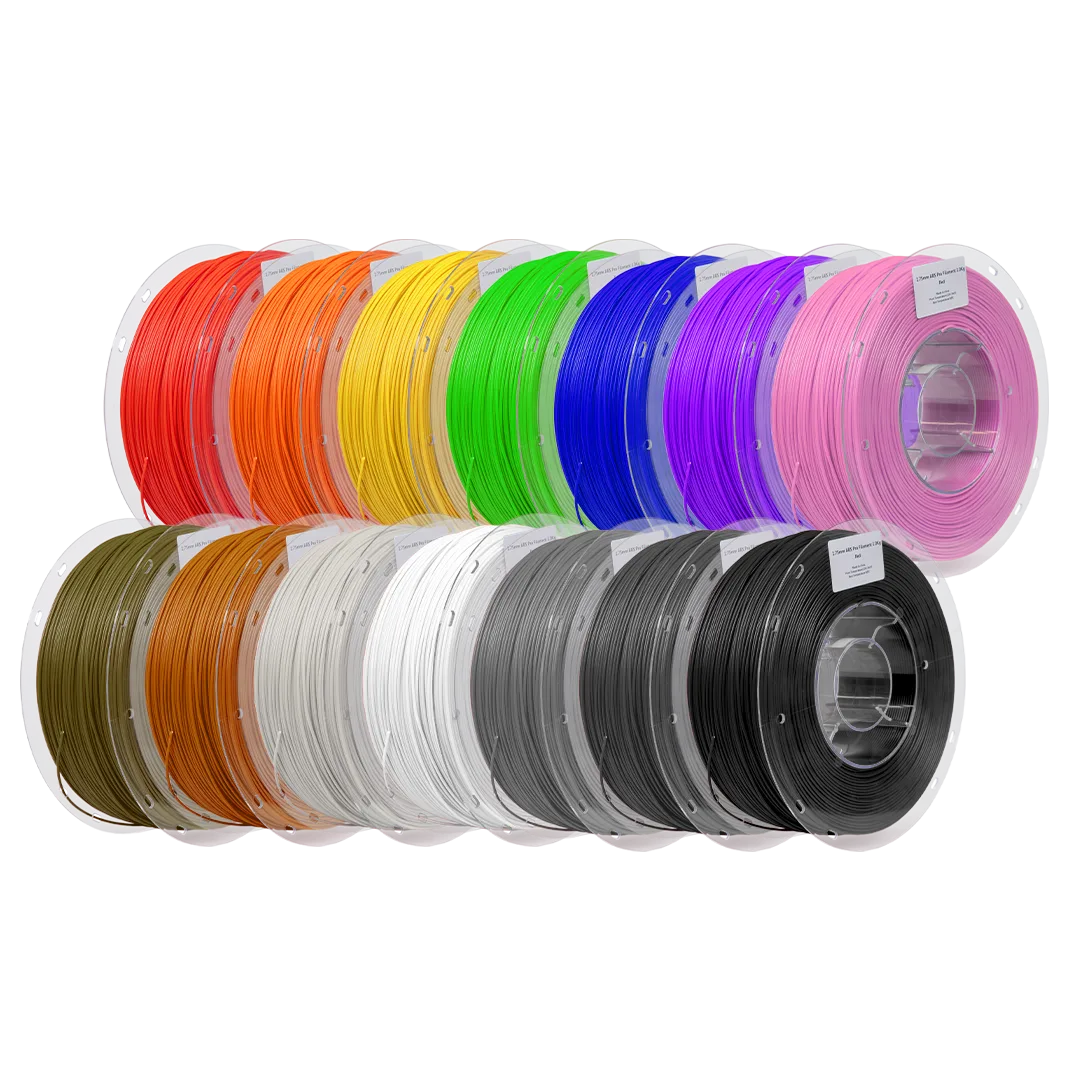
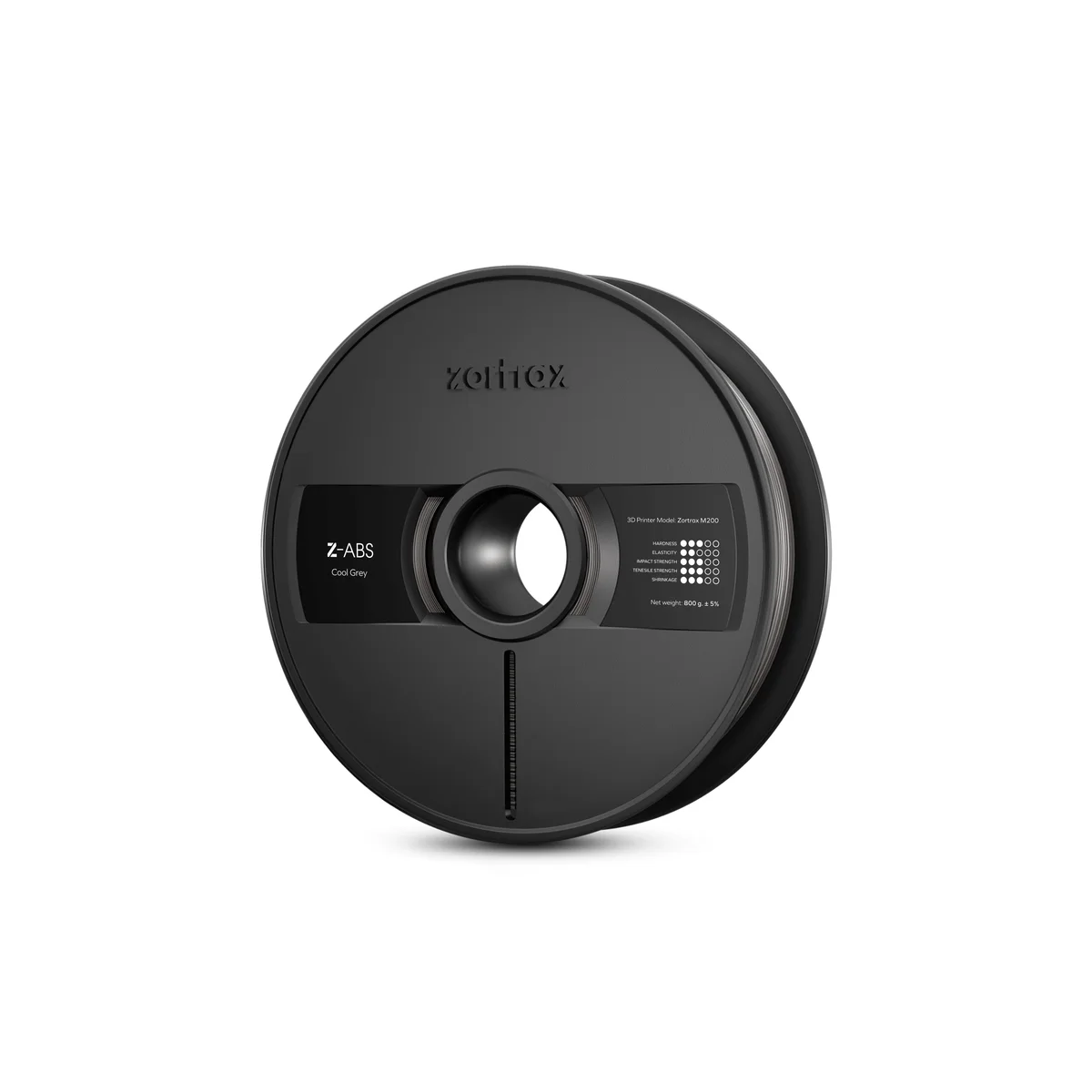
ABS is the engineering plastic behind building bricks and appliance housings. It takes heat to about 95–100 °C, resists impact, sands and finishes well and can be vapour-smoothed with acetone, but it shrinks noticeably and smells while printing.
Typical print settings for ABS
| Nozzle temperature | 230–260 °C |
|---|---|
| Bed temperature | 90–110 °C |
| Enclosure | Strongly recommended |
| Drying | 70–80 °C for 2–4 h if stored long |
Typical ranges for this material; the spool label and the printer profile are the authority.
What it is good for
Good for parts that must survive heat: automotive clips, equipment covers, gears and load-bearing mechanisms. Avoid large flat parts on an open printer, where corners lift off the bed.
Which printer
Best on an enclosed printer such as the Bambu Lab P2S, X2D or H2 series to limit warping and fumes
Carbon- or glass-fibre filled
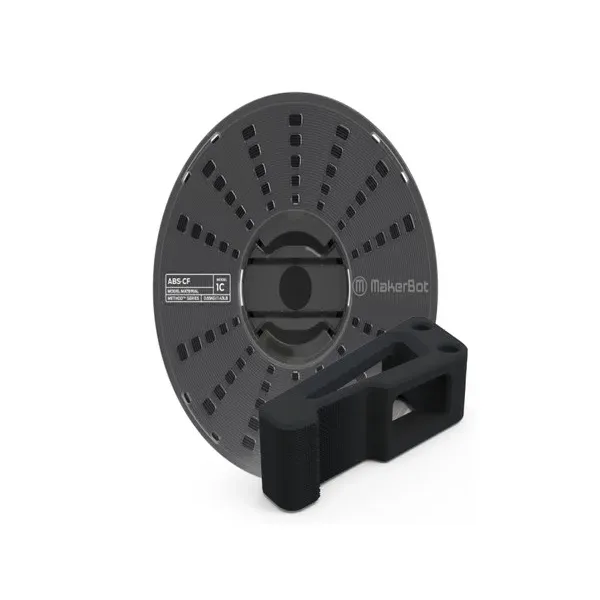
CF and GF grades are the base material above with short fibres mixed in: parts come out stiffer, flatter and with a matte finish, but the fibres wear a brass nozzle out fast. Use a hardened-steel nozzle of 0.4 mm or larger and always dry the spool before printing.
Storage and care
Print with ventilation or a filtered printer, keep the spool dry, and if corners lift, raise the chamber temperature or use the bed adhesive your printer manual recommends.