PETG filament
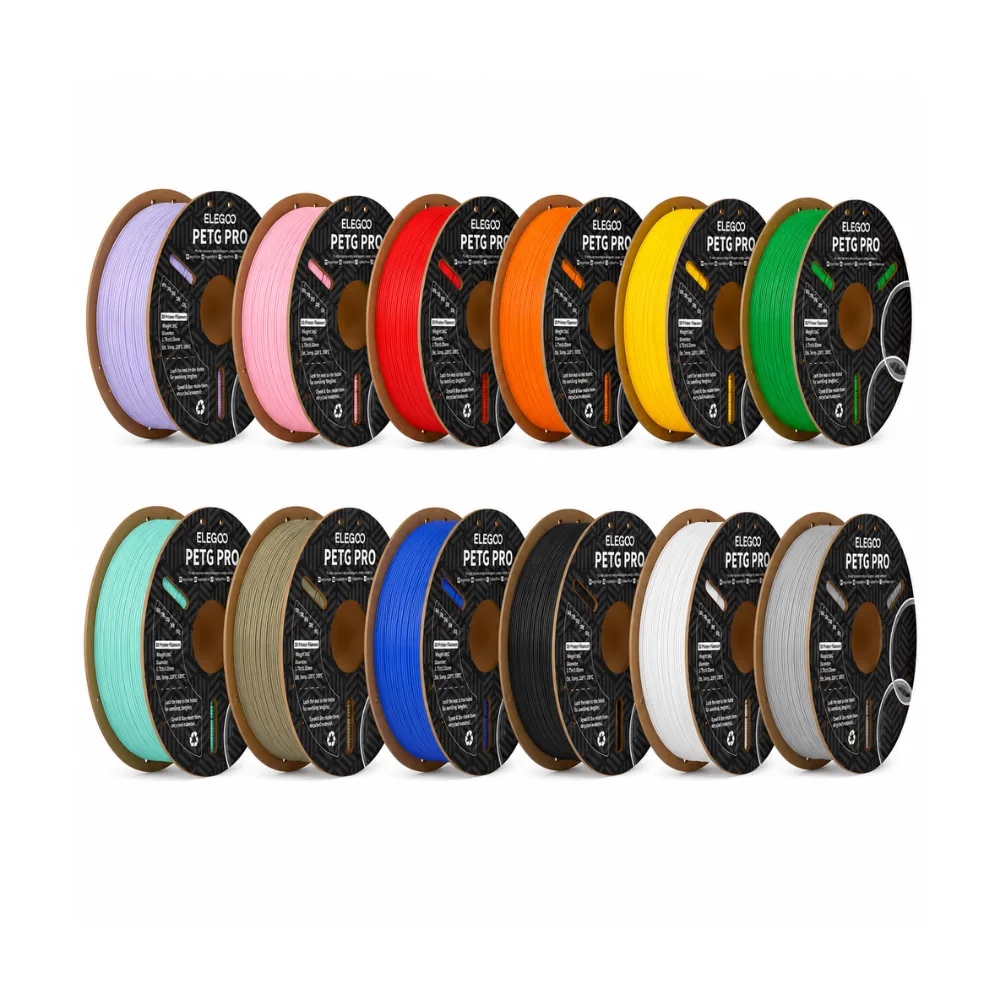
PETG is tougher and more heat-resistant than PLA (usable to roughly 75–80 °C), with better chemical and moisture resistance, and it still prints on an open frame. The trade-offs are a glossier finish and more stringing between parts.
Typical print settings for PETG
| Nozzle temperature | 230–250 °C |
|---|---|
| Bed temperature | 70–85 °C |
| Enclosure | Not needed |
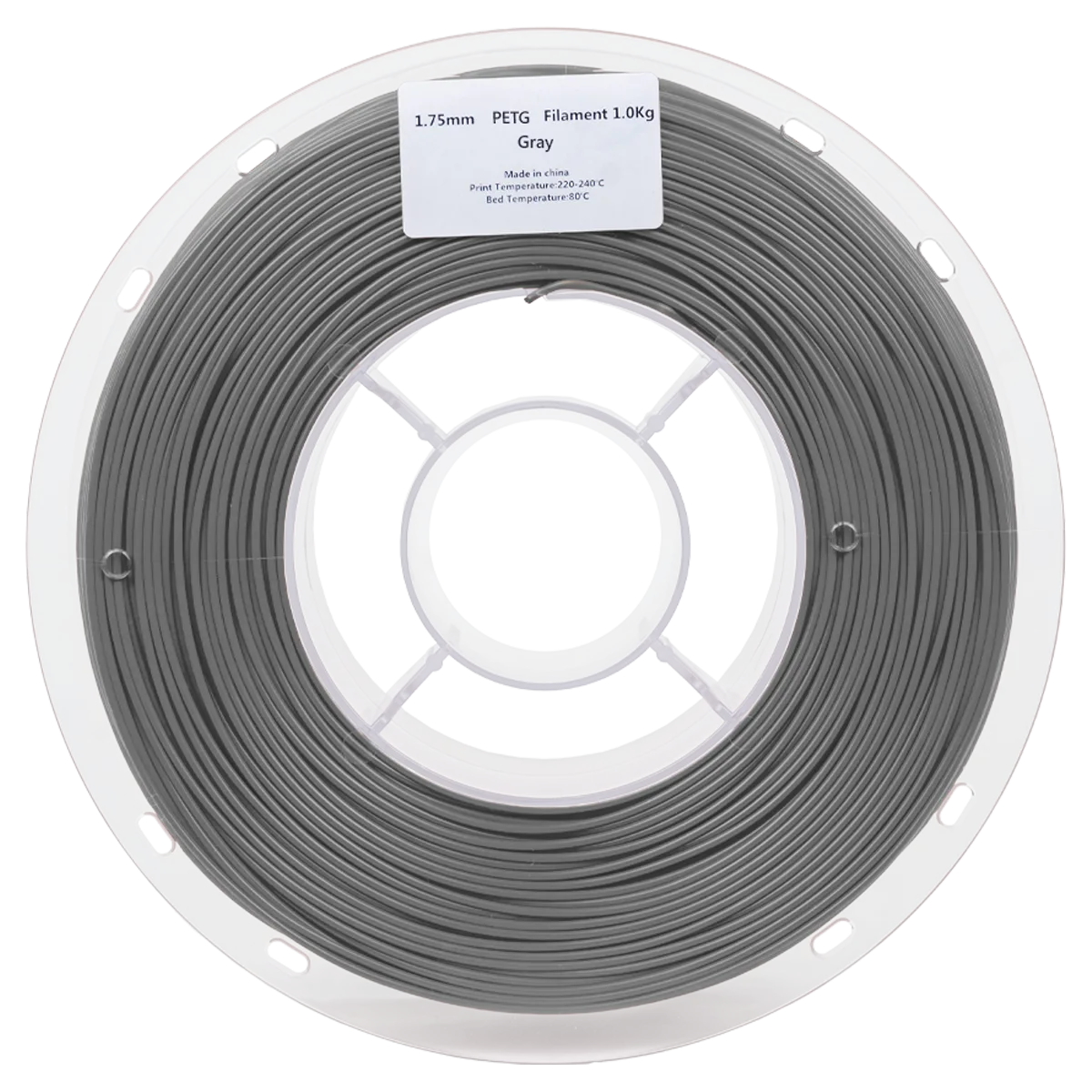
| Drying | If it strings: 60–65 °C for 4–6 h |
Typical ranges for this material; the spool label and the printer profile are the authority.
What it is good for
Good for functional parts, enclosures, brackets, containers, anything that gets wet and short-term outdoor use. It is the material most makers reach for once PLA is not strong enough.
Which printer
Prints on open-frame machines such as the Bambu Lab A1 mini / A1 and Creality SPARKX i7
Carbon- or glass-fibre filled
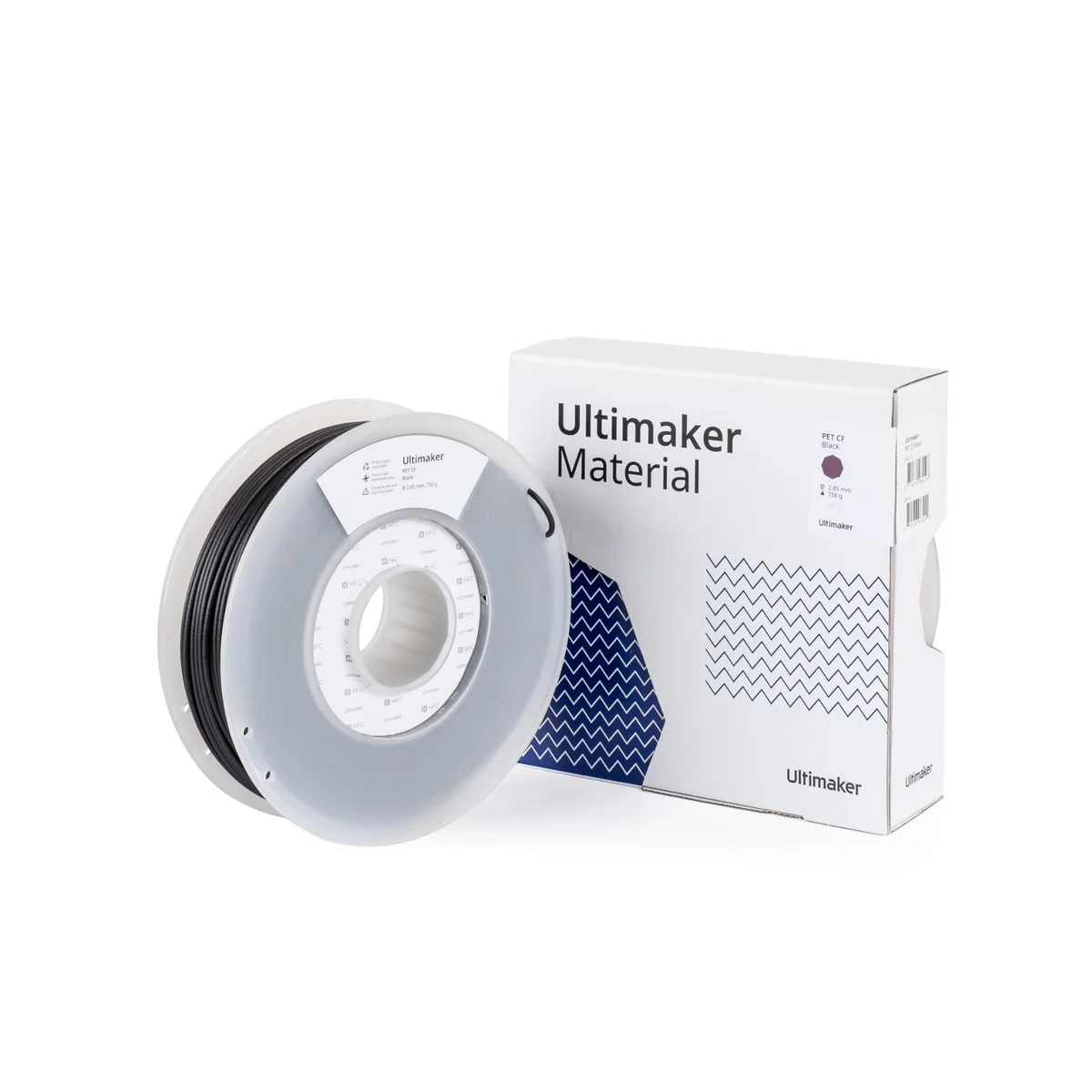
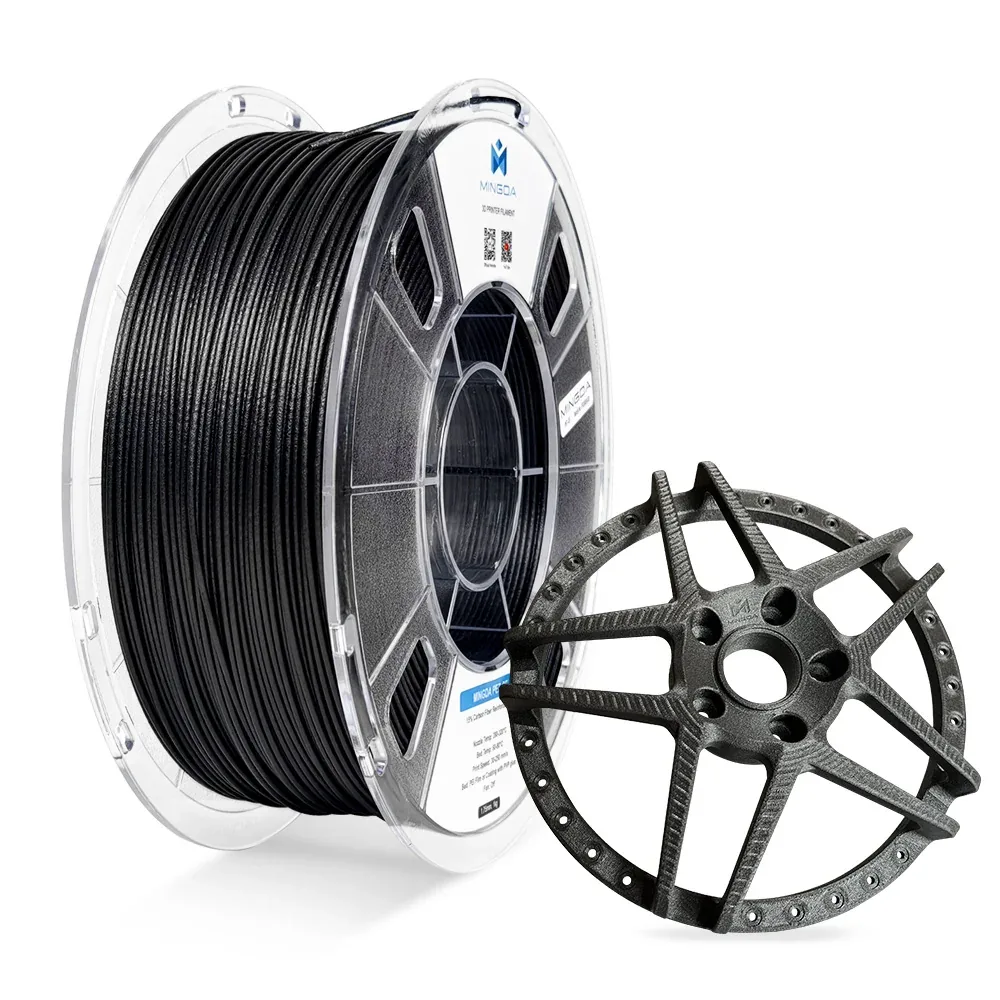
CF and GF grades are the base material above with short fibres mixed in: parts come out stiffer, flatter and with a matte finish, but the fibres wear a brass nozzle out fast. Use a hardened-steel nozzle of 0.4 mm or larger and always dry the spool before printing.
Storage and care
PETG absorbs moisture faster than PLA. If stringing or rough surfaces appear, dry it at 60–65 °C for four to six hours and reduce part cooling so layers bond.